







Self-assessment: Do I need a hearing test?
Just answer the four questions below to see whether you should consider getting a hearing test.


Hearing loss symptoms can differ depending on the type of hearing impairment you have.
Below are some of the most common hearing loss signs and symptoms. If you recognise any of them, we recommend booking a free hearing test at a hearing clinic near you so that we can give your hearing a thorough check.




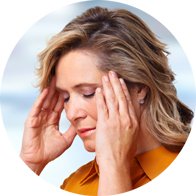

If you can relate to any of the signs of hearing loss above, then it may be an indication that you have a loss of hearing.
Or perhaps you recognise these signs in someone you know, like a friend or family member who you think might be ‘hard of hearing’.
Just answer the four questions below to see whether you should consider getting a hearing test.
Your answers indicate that you experience symptoms of hearing loss. We strongly recommend booking a hearing test in one of our clinics.
The result is an indication. An in-person hearing test can determine if you have a hearing loss.
Your answers indicate that you experience some symptoms of hearing loss. We recommend booking a hearing test in one of our clinics.
The result is an indication. An in-person hearing test can determine if you have a hearing loss.
Your answers do not indicate that you experience symptoms of hearing loss. However, if you experience trouble hearing, we recommend booking a hearing test in one of our clinics.
The result is an indication. An in-person hearing test can determine if you have a hearing loss.
The degree of hearing loss is generally categorised as being either mild, moderate, severe, or profound.
It can be measured in decibels hearing level (dB HL), referring to how loud sounds need to be for you to hear them.


Sensorineural hearing loss
Sensorineural hearing loss is the most common type of hearing impairment. It can be caused by damage to tiny hair-like cells in the inner ear or damage to the auditory nerve. Often, this type of hearing loss can be treated with hearing aids.
Conductive hearing loss
Conductive hearing loss occurs when there are mechanical problems in the middle or outer part of the ear. It can also be caused by an obstruction of some sort in the ear canal, such as ear wax stopping sound from reaching the eardrum. It can be treated using hearing aids or other medical options.
Mixed hearing loss
When sensorineural and conductive hearing loss occur together, it’s called mixed hearing loss.
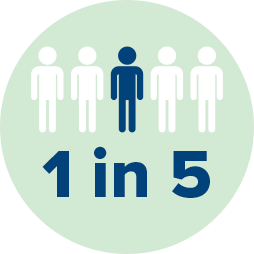
Hearing loss is more common than you might think.


Understanding the source of your hearing problems can give our professionals insight into your individual needs. This means we can advise you on best options for your specific treatment. That's why we encourage you to speak with our experts as soon as you notice any hearing difficulties.
If you’re looking for hearing loss treatment, the sooner you act the better.
This is key to improving your quality of life, so that you can enjoy your favourite activities again, whether you want to engage more in conversations with friends and family or simply watch your favourite TV show more easily.

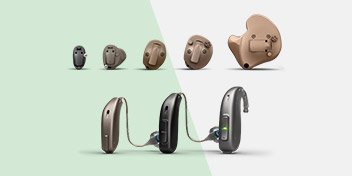
The best solution for your hearing loss will depend on your:




You might be wondering what happens at a hearing test, especially if it has been a while since you last had one. Or maybe you’ve never had one.
This short video takes you through what happens, step by step.
|
Audio |
Visual |
|
Music What happens at a hearing test?
Here is a look at what happens at a hearing test with Hidden Hearing.
|
What happens at a hearing test
Hidden Hearing logo
|
|
Music
Our hearing professional will sit down with you to discuss your hearing concerns, Medical history and Lifestyle
|
Our hearing professional will discuss Concerns History Lifestyle
Audiologist sitting with a customer
|
|
Music
This is followed by a physical ear exam. Your ears will be checked for ear wax and other irregularities. |
Physical ear exam
Ear wax Other irregularities
Audiologist examining customer’s ear
|
|
Music
You will be placed in a sound booth, where you will complete a series of tone, speech and word tests
|
Sounds booth
Tone, Speech & word tests
Man sitting in a sound booth taking a hearing test |
|
Music Hidden Hearing goes above and beyond a baseline Hearing test by relying on the following pillars |
Baseline Hearing Test Hidden Hearing Hearing test
Histogram showing baseline hearing test and Hidden Hearing hearing test |
|
Music Audiological, cognitive, psychological and subjective nuances
That’s it.
|
Pillars Audiological, cognitive, psychological, subjective nuances |
|
Music
Upon completion of your hearing test, you will get same day result |
Same day result
Audiologist sitting with customer |
|
Music
If you have no hearing loss, great!
We recommend you test your hearing once annually if you are over 60
|
No hearing loss? Great!
We recommend you test your hearing once annually if you are over 60
Man walking
|
|
Music
If a hearing loss is detected, your hearing professional will provide you a customized hearing solution |
Hearing loss detected?
We’ll provide a customized hearing solution
Audiologist talking with customer and showing hearing aids options.
|
|
Music A hearing test is easy and takes about 30 minutes to complete |
A hearing test is easy and takes about 30 minutes to complete
Audiologists waving goodbye at customer
|
|
Music Book your free hearing test at Hidden Hearing today. |
Book your FREE hearing test at Hidden Hearing Today!
Hidden Hearing logo
|
For Frank, being his own boss felt so freeing at one point. But over time, it felt limiting when he began struggling to communicate with his customers.
It took Frank 15 years to build his business. Now, with the right hearing solution, he's confident he'll still be running it for the next 15.
Hidden Hearing's personalised hearing care keeps his hearing as sharp as his knives so he can be his best every day. See what state-of-the-art hearing technology tailored to your needs can do for your hearing and your life.

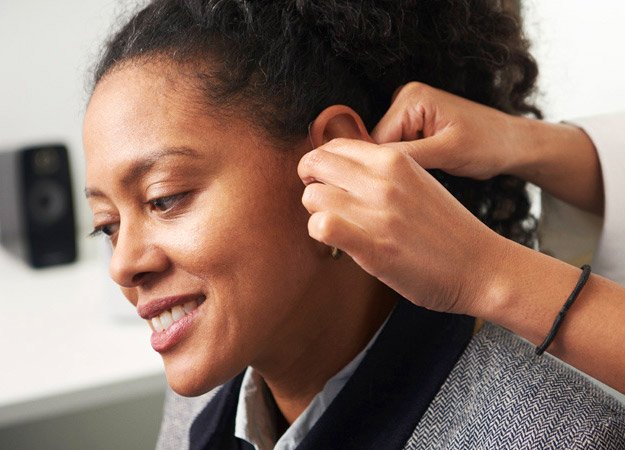
There is no cure for loss of hearing. But there are steps you can take to prevent it and reduce your chances of developing hearing loss over the course of your lifetime.
Learn more about the ways to both protect your hearing and to keep it healthy – these could help prevent you from developing hearing loss.

1. Kochkin, Sergei (2009) ”MarkeTrak VIII: 25-Year Trends in the Hearing Health Market” The Hearing Review, vol. 16, no. 11.
2. McCormack, A. & Fortnum, H. Why do people fitted with hearing aids not wear them? Int J Audiol. 2013 May; 52(5): 360–368.
3. Chisolm, T. H., Johnson, C. E., Danhauer, J. L., Portz, L. J. P., Abrams, H. B., Lesner, S., … Newman, C. W. (2007). A
systematic review of health-related quality of life and hearing aids: Final report of the American Academy of Audiology Task
Force on the Health-Related Quality of Life Benefits of Amplification in Adults. Journal of the American Academy of Audiology,
18(2), 151-183
4. Masterson EA, Bushnell PT, Themann CL, Morata TC. Hearing Impairment Among Noise-Exposed Workers — United States, 2003–2012. MMWR Morb Mortal Wkly Rep 2016;65:389–394. DOI: http://dx.doi.org/10.15585/mmwr.mm6515a2
5. Haile et al. Hearing loss prevalence and years lived with disability, 1990–2019: findings from the Global Burden of Disease Study 2019. The Lancet. 2021 March. https://doi.org/10.1016/S0140-6736(21)00516-X